How to measure glass for a replacement
The most common reason a new pane does not fit is not a production error. It is a badly specified size. The difference between the size of the opening and the size of the pane is the key, and it can be explained in a few lines.
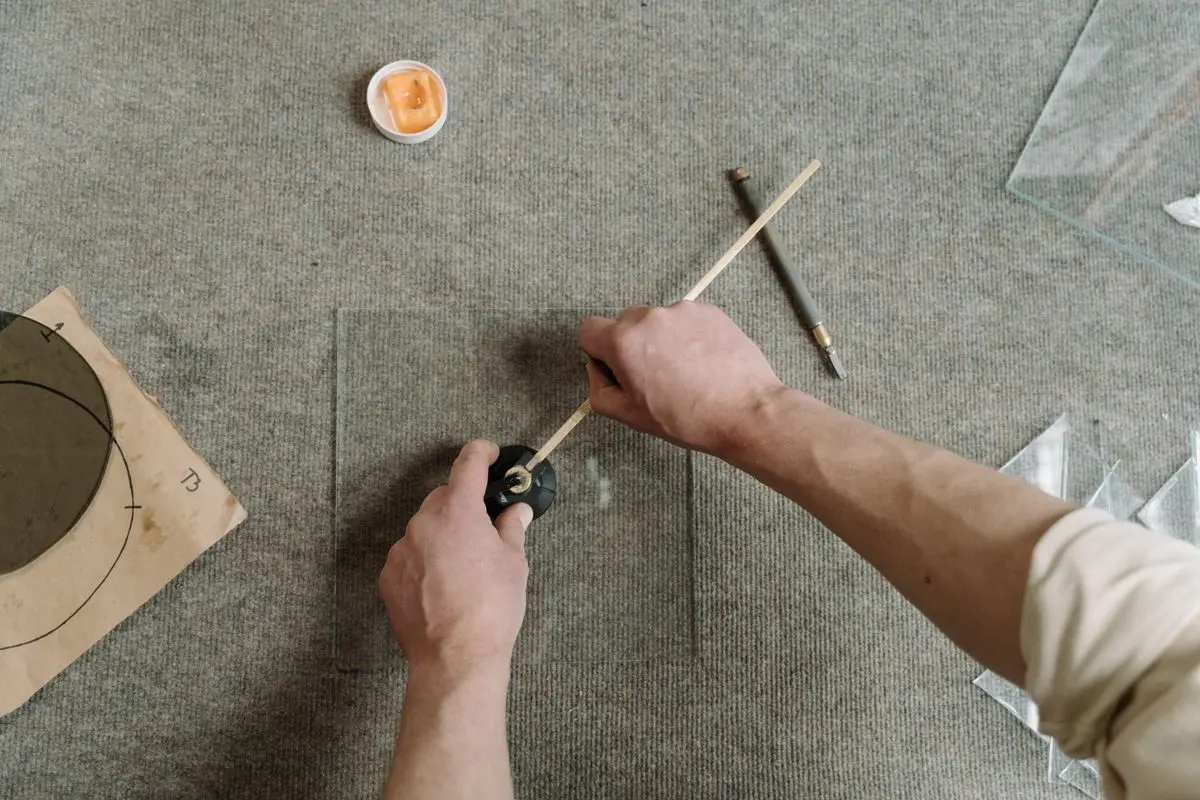
The two sizes people mix up
The size of the opening is the clear distance between the glazing beads, or between the edges of the rebate the glass sits in. The size of the pane is what gets ordered from the factory, and it is smaller, because glass needs an allowance for seating and thermal movement.
Deduct the allowance yourself and have the glazier deduct it too, and the pane rattles in the frame. Deduct nothing while the glazier assumes it has been deducted, and the pane will not go in. So always state in the enquiry which of the two sizes you are sending. Leave the allowance to the firm.
Step by step
- Lift the glazing bead if you can. Only then can you see how the glass really sits. Without that, every measurement is indicative.
- Measure in millimetres. A tape measure is fine; an estimate in centimetres is not.
- Measure in three places. The width at the top, middle and bottom. The height on the left, in the middle and on the right.
- Write down the smallest value. Old frames are rarely regular, and the narrowest point is what production has to work to.
- Check both diagonals. If they differ by more than a hair, the opening is not square. It then cannot be made from two numbers and a template will be needed.
- Measure the thickness. With a caliper at the edge, or leave it to the survey. On a sealed unit the spacer between the panes is visible from the side.
- Photograph the frame. A picture of the rebate and the bead tells the glazier more than the numbers do.
When your own measurement is never enough
- a non-standard shape, an arch or a cut corner,
- a frame that is visibly out of square,
- toughened glass, where a mistake cannot be corrected after production,
- an insulating unit, where the thickness and the spacer type also matter,
- large formats, where the way the glass is seated changes too.
Why the bead has to come off first
The bead covers the edge of the glass. Measuring over it gives a size smaller than the real opening, and by a different amount each time depending on the bead profile. On uPVC windows the difference is usually largest. That is why a professional survey means lifting the bead rather than estimating.
What to do if you cannot get into the frame
Measure what you can and say that the measurement is taken over the bead. For a first answer that is enough. The firm can tell the scope of the job from it and decide whether it needs a survey before quoting, or only before ordering the glass.
In one sentence
Measure in millimetres, in three places, write down the smallest value, check the diagonals, say whether it is the opening or the pane, and leave the allowance to the glazier. The rest is their job. More about glass types and edge finishes is on the page about glass cut to size.
Frequently asked questions
How many millimetres of allowance are left around glass?
We deliberately give no figure here, because it varies with the frame type, the size of the pane and the type of glass. The allowance is set by the firm ordering the glass, which is why the size is always confirmed by a survey.
Can I just send dimensions and have the glass made without a survey?
For small, simple panes that sometimes works, but the risk sits with whoever gave the measurement. For toughened glass and insulating units a survey on site is always done, because a mistake cannot be corrected.
Send us the glass sizes
An e-mail address is enough. Tell us what broke or what you need made, and add the dimensions even if they are only approximate.
- Say whether you are sending the size of the opening or of the pane.
- Add both diagonals if you have them.
- A photo of the rebate and the bead helps.