Shopfronts, door glazing and glass splashbacks
Glass infills are jobs where the glass is not in a window but forms a surface in its own right: a shopfront, a glazed door, a shelf, a splashback behind a kitchen worktop. What decides them is the glass type, the fixing method and access to the site, because a large pane is not carried by hand.
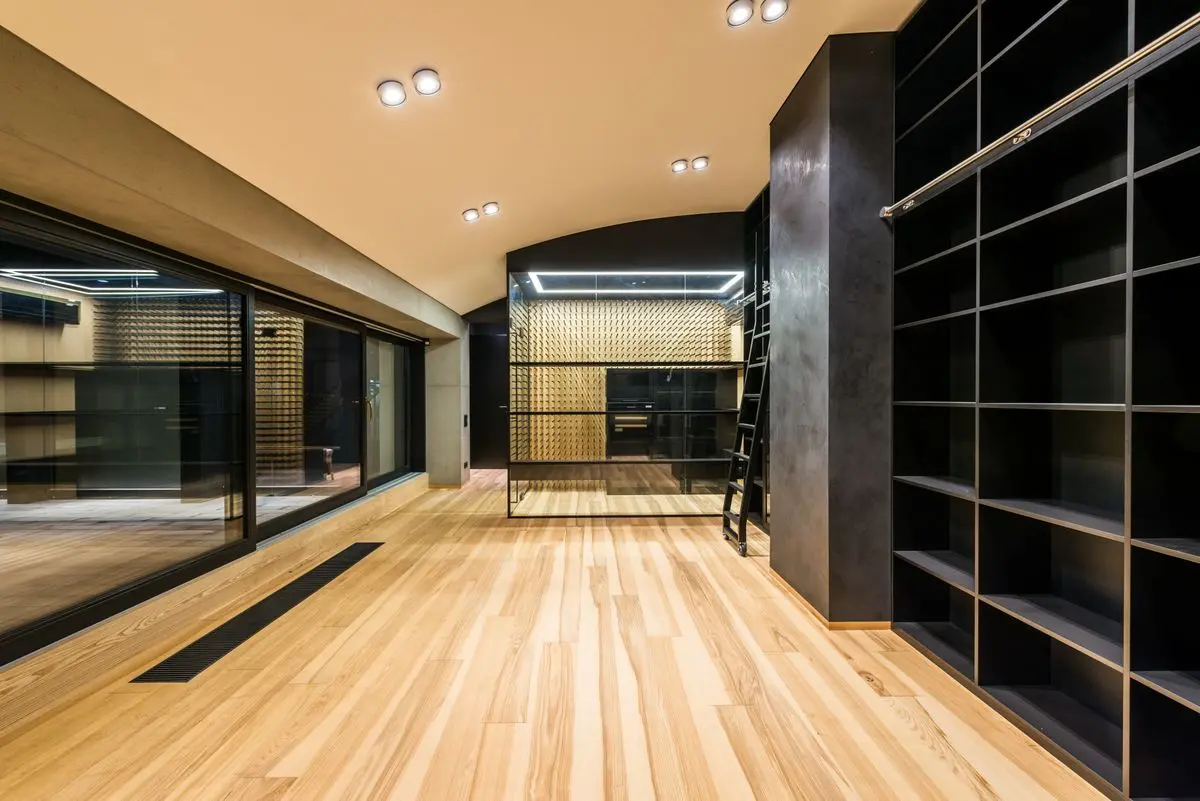
Shopfronts and large-format glazing
With a shopfront, everything around the glass is added to the cost: handling a large pane, suction cups, often a platform or more people, and keeping the area around it safe. A broken shopfront needs two separate things resolved. The first is securing the opening immediately so the premises can be locked. The second is the glass replacement itself, which is normally ordered and waited for.
For the enquiry it helps to know whether the shopfront is one piece or several panes, whether it includes a door opening, and whether there is room around it for handling.
Door glazing
For internal and entrance doors the most common jobs are replacing a broken infill and swapping clear glass for obscured glass for privacy. A door infill is a typical position where safety glass is normally required, because people walk into doors and the glass is at body height. A glazing firm will therefore usually not offer plain float glass for a door, even though it would be cheaper.
Obscurity can be achieved by sandblasting the whole surface, by a sandblasted pattern or by film. Film is cheaper and reversible; sandblasting is permanent and cannot be scratched off in cleaning.
Glass splashback behind a kitchen worktop
A back-painted glass splashback replaces tiles between the worktop and the wall units. It gives one continuous surface with no joints, which is the main reason it is chosen: it cleans easily.
What has to be dealt with:
- Socket cut-outs. They have to be surveyed and drawn before production. Toughened glass is not drilled afterwards.
- The section behind the hob. Toughened glass is used where the temperature is higher. With a gas hob, the distance from the flame is a further consideration.
- Colour. The back of the glass is painted. The final shade is affected by whether the glass is ordinary clear or low-iron, because clear glass has a greenish cast that shifts the colour slightly.
- Shape. Kitchen walls are rarely square, and the splashback is usually surveyed only once the units are installed, sometimes from a template.
Shelves, table tops and balustrades
Glass shelves are made from toughened glass with a finished edge. What matters is the span between supports and the expected load, and the thickness follows from that. Table tops are similar, with extra attention to the edge profile and the corners.
Balustrades and overhead glazing are a different matter. There the choice is normally not the customer's but a requirement that follows from the standards and the building design, and laminated glass is usually involved. We do not state the make-up here, because it varies with height, load and the way the glass is held. We have it confirmed by the firm that will run the job.
When a shopfront breaks
The priority is securing the opening so the premises can be closed, and clearing the broken glass off the pavement. The glass itself comes after that. In the enquiry, give the pane dimensions, say whether the shopfront is glazed below sill level too, and whether there is room around it to handle a large sheet.
What to put in the enquiry
- what kind of surface it is and exactly where,
- the dimensions, and for splashbacks a photo of the whole wall,
- whether holes or cut-outs are expected,
- the floor and whether a large pane can be manoeuvred in,
- for business premises, the hours during which work is possible.
Frequently asked questions
Can a glass splashback go behind a gas hob?
Normally yes; toughened glass is used and the distance from the flame is taken into account. The exact requirement differs by hob type, so the glazing firm checks it against the specification rather than from a photo.
Can obscured glass replace clear glass in a door?
Yes, and it is one of the most common changes. The choice is between sandblasting, factory-obscured glass and film. Sandblasting is permanent; film is cheaper and can be removed.
Is a splashback measured before or after the kitchen is installed?
After. Before that only a rough estimate is possible, because the real shape depends on the fitted worktop and the units.
Send us the glass sizes
An e-mail address is enough. Tell us what broke or what you need made, and add the dimensions even if they are only approximate.
- Say what kind of surface it is and exactly where.
- For splashbacks, add a photo of the whole wall.
- For business premises, mention when work is possible.